

It’s now four months into Circular Hospitality, my residency in collaboration with Design Tasmania, Regional Arts Australia, Dier Makr, Scholé and The Agrarian Kitchen.
The project explores how restaurant waste can be transformed into new design outcomes, including lighting, commercial tile surfaces, and a new ceramic-like structure to reduce reliance on plastic seedling pots.
Hospitality waste in tassie feels like a largely untapped material stream, rich in both narrative and technical possibility. Unlike mixed waste, many of these by-products are consistent, local and traceable, which makes them incredibly interesting to work with as part of a design and material research process.
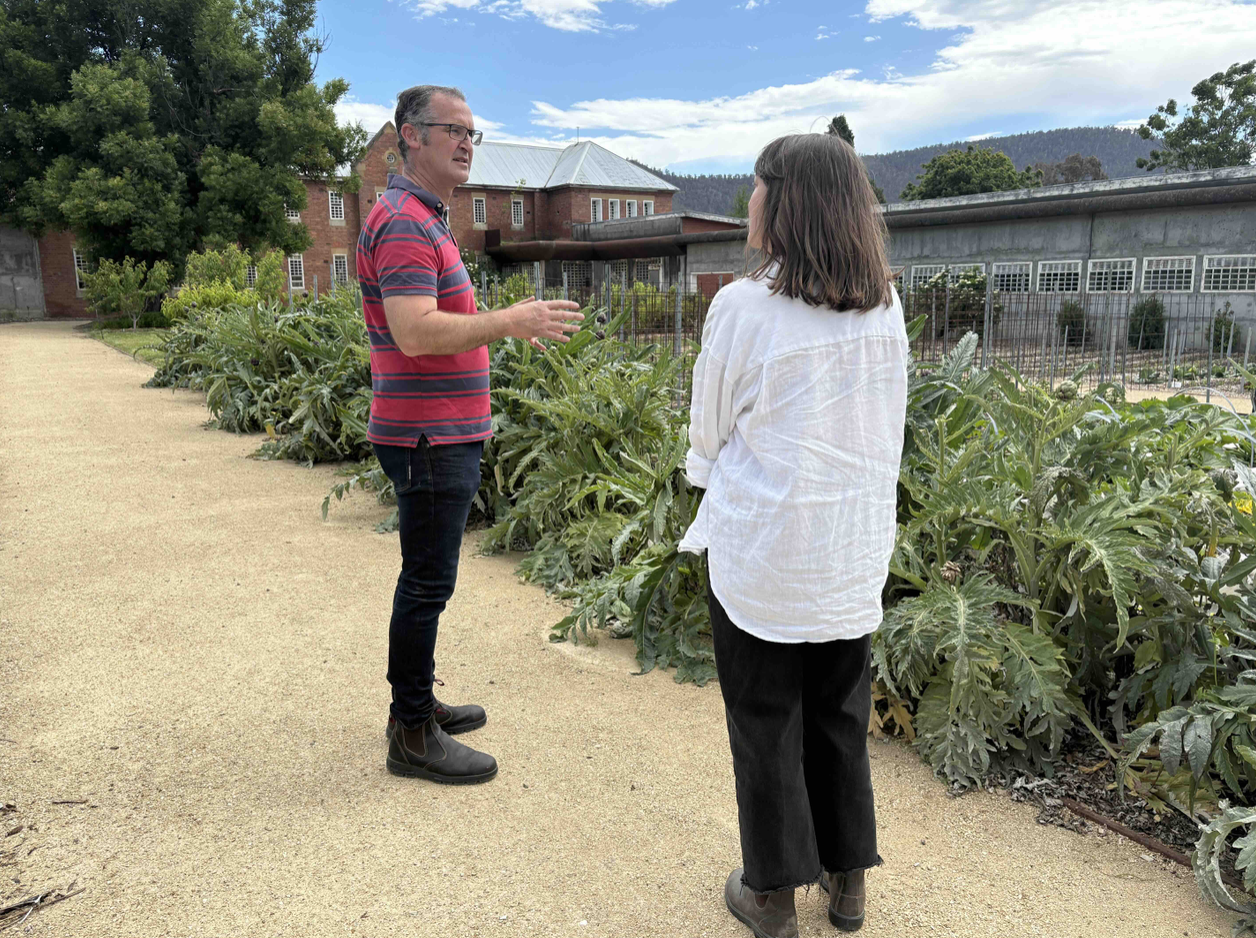
inspiring chats with rodney dunn from the agrarian kitchen.
In November, an audit was conducted at each venue to identify the waste streams causing the most friction, as well as the materials with the greatest potential to be reworked into something useful. That process helped shape the direction of the residency and the outcomes now being explored.
Some of the materials I’ve been working with so far include fire bricks from The Agrarian Kitchen ovens, fryer oil from Scholé, and wine bottles from Dier Makr, among others.
The aim is to treat these waste materials as legitimate design inputs and develop outcomes that are useful, repeatable and grounded in the specific character of each venue.
So far, much of the work has focused on material processing and early testing. That has meant breaking down glass, bricks and shells into workable materials, and beginning the slow but important job of understanding how they behave, both technically and aesthetically.
A big focus has also been developing a new structure for The Agrarian Kitchen to replace the plastic seedling pots used in the greenhouse. As part of that, I’ve been working on a clay body made solely from materials found within their dining waste stream and the fire bricks from their ovens. Those bricks have helped cook food for almost a decade, and now they’re being reimagined to help grow the next generation of it. Nice little full-circle moment, really.
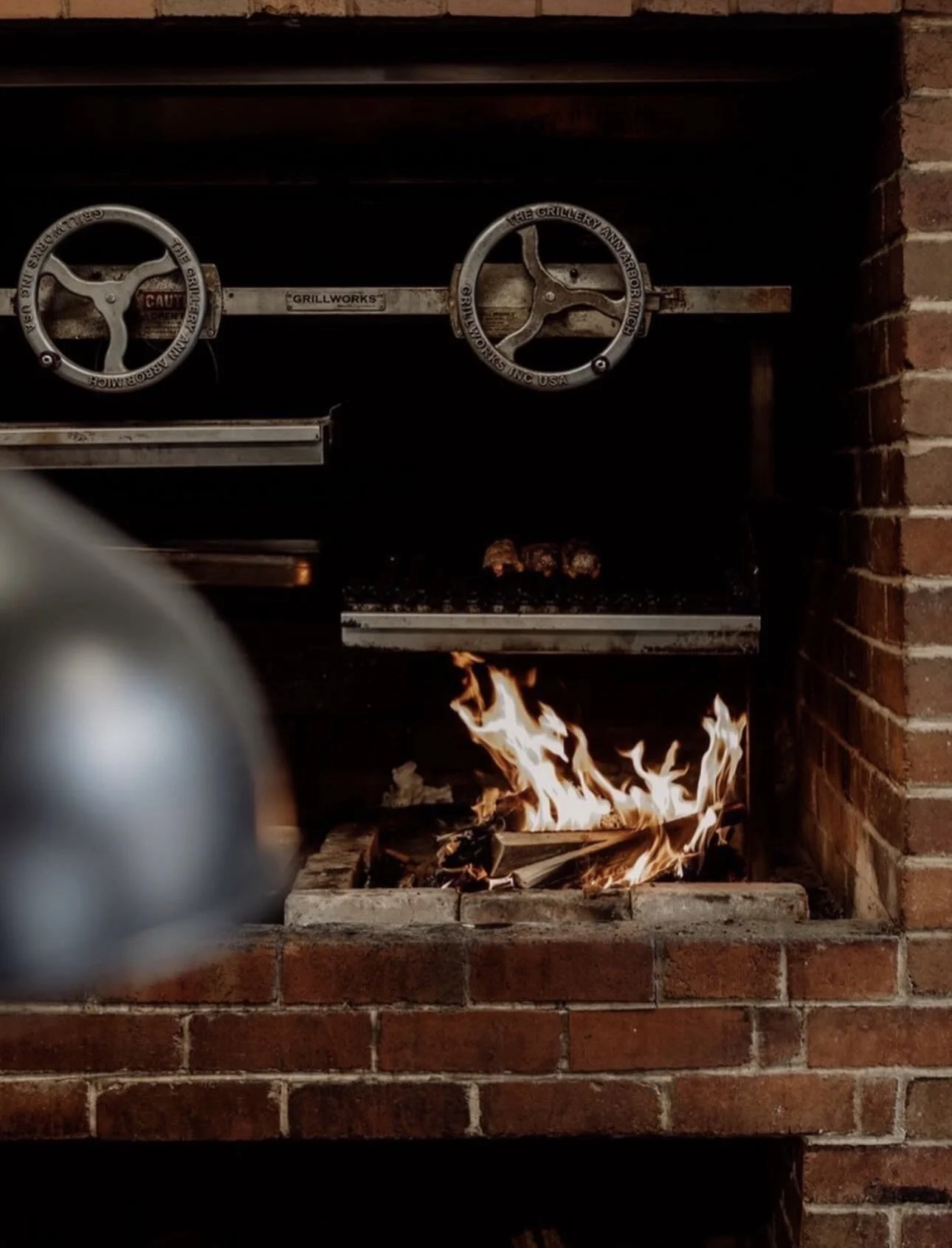
the agrarian kitchen ovens.
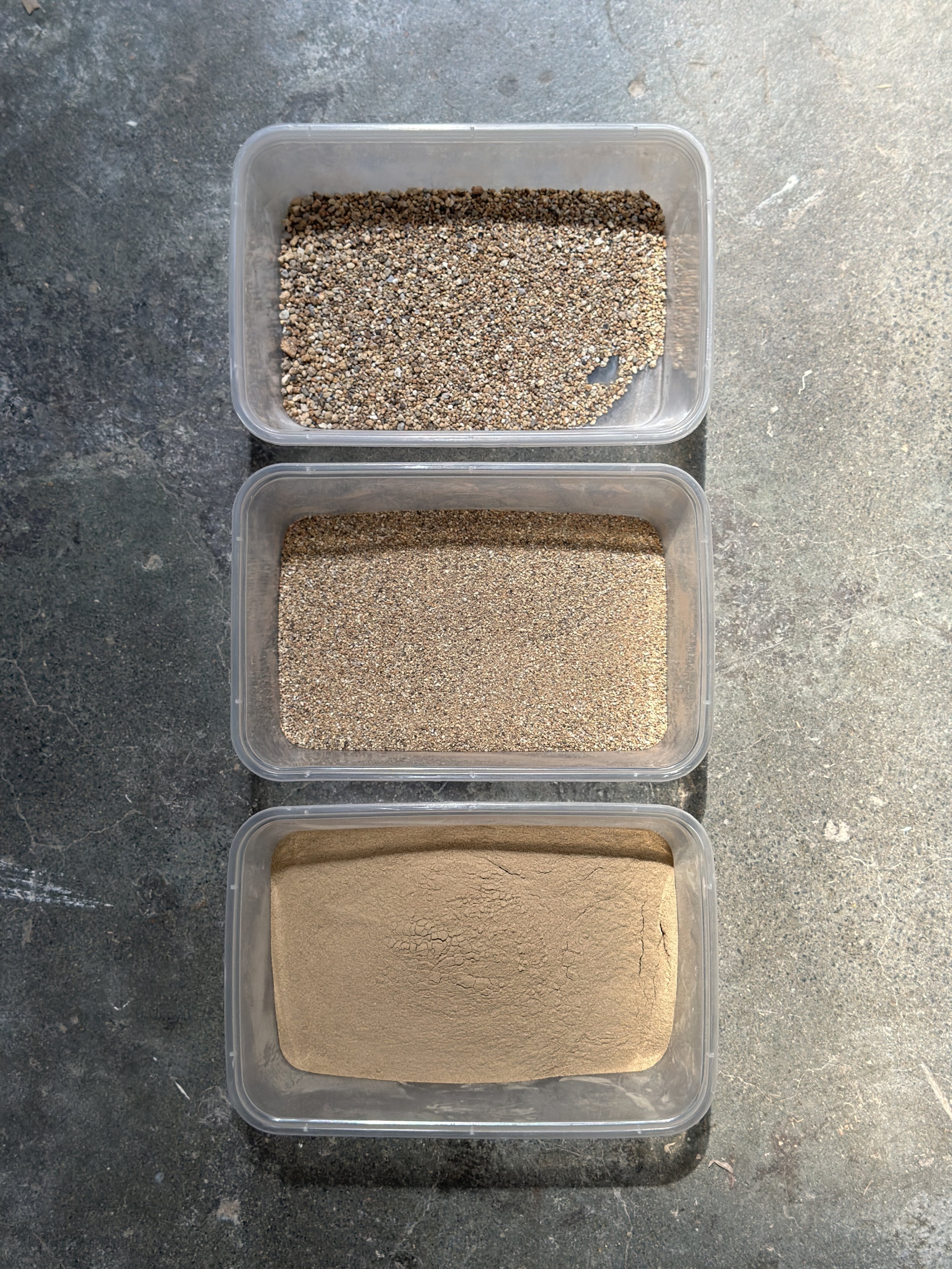
Three mesh sizes of fire brick from The Agrarian Kitchen ovens, each playing a different role in the clay body, from porosity and structure to cohesion and strength.
There’s still a long way to go, but the early stages of the residency are already revealing just how much potential sits inside these overlooked material streams. What’s emerging is not just a body of ceramic research, but a broader conversation about waste, value and how design can play a role in reshaping both.
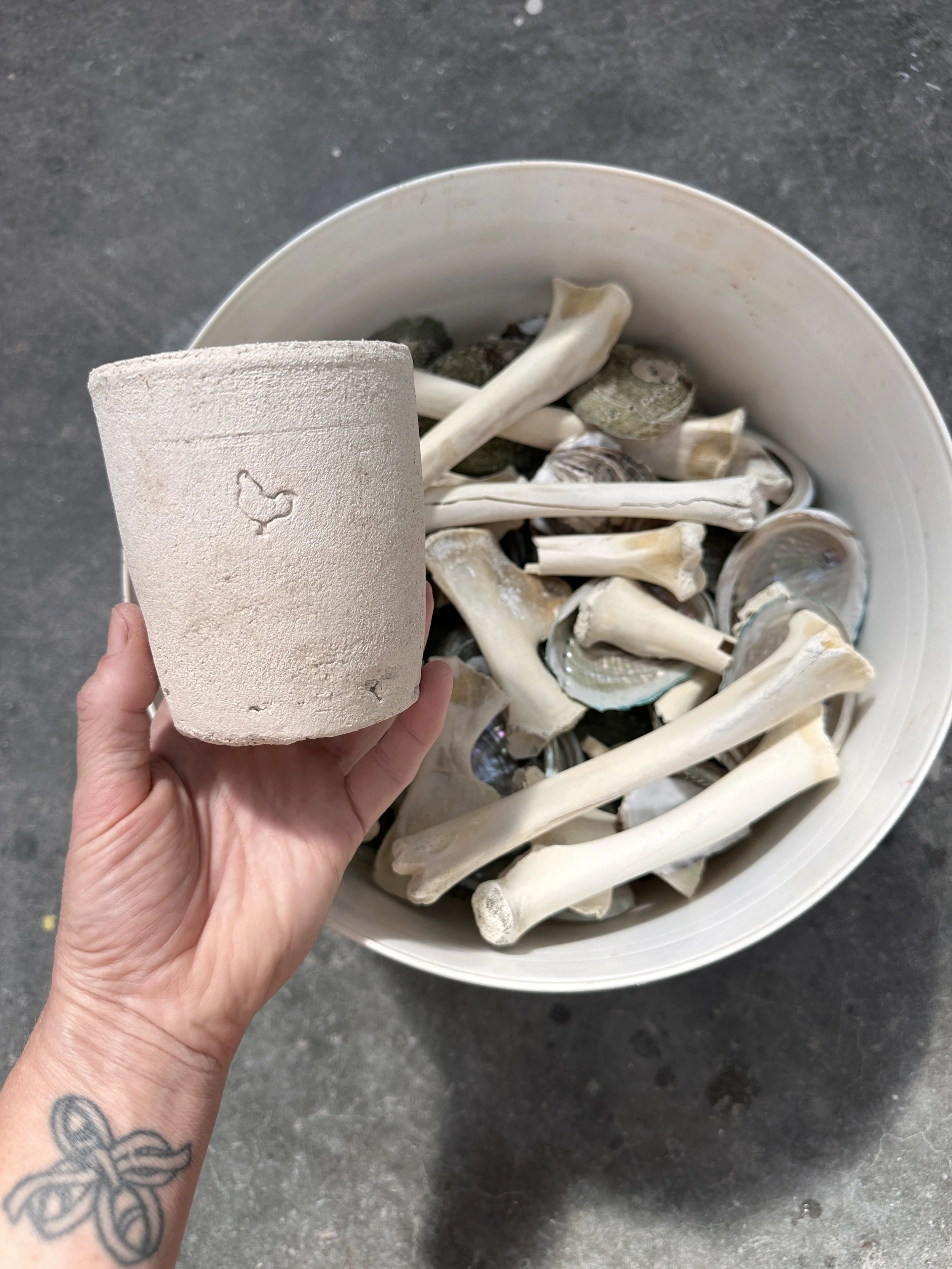
The seedling pot control test using 60% repurposed materials with the goal to get to 100%.